
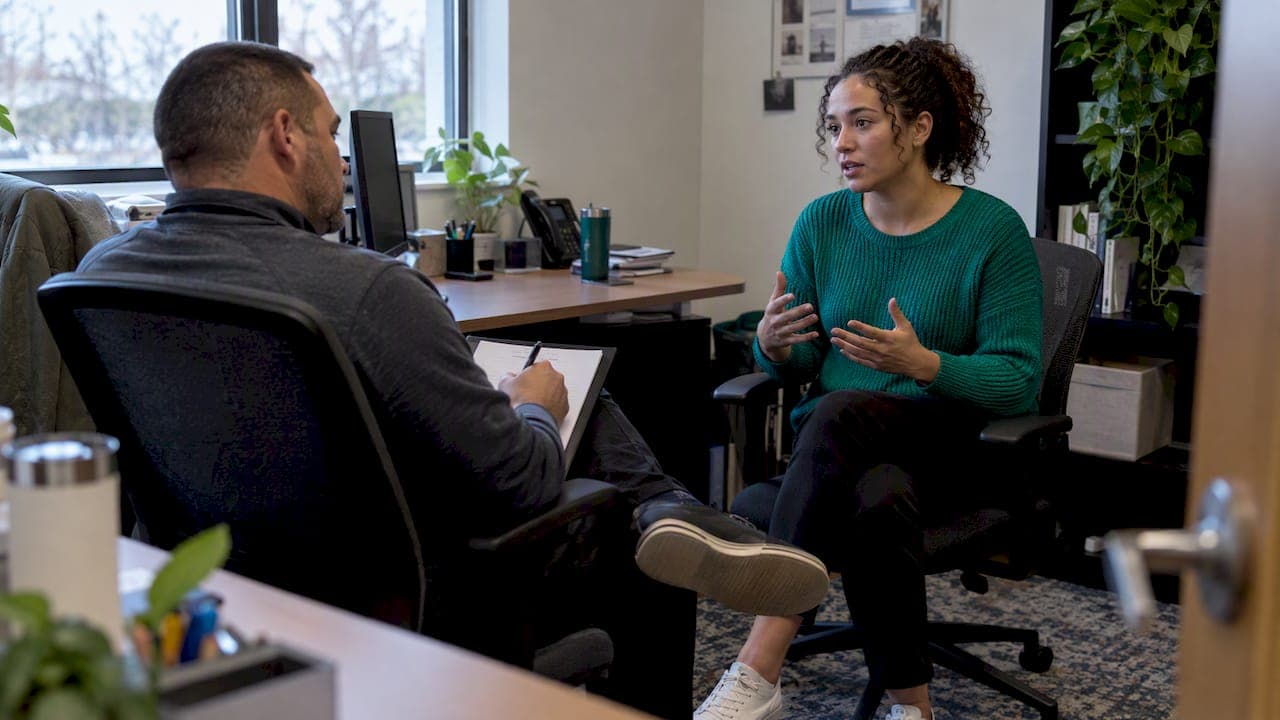
Deliberate practice works for sales when you design the drills. Anders Ericsson's research calls for coach-built tasks with immediate feedback, and meta-analytic reviews say it explains a meaningful but limited share of performance. Start with a one-week pilot: 10–15 minutes a day on one behavior, scored on a 3-item rubric. Call Flow, our AI role-play platform, can run it.
TL;DR:
- Build each drill around one observable behavior, a scenario designed by a coach, an anchored three to five item rubric, and immediate feedback.
- Pilot with 4 to 8 reps for one week, practicing 10 to 15 minutes daily; keep the rubric fixed and compare baseline and final scores.
- Use focused drills chiefly for newer reps; experienced sellers benefit more from progressively harder real deals, with drills reserved for specific skill gaps.
- Pair recordings with a behavior checklist, let reps score themselves before coaching, and keep feedback from the same source as training to support transfer.
Table of Contents
- What deliberate practice means for sales teams
- Core components of effective deliberate practice for sales
- How to design sales-specific deliberate-practice drills
- Feedback, observation forms, and video: how to make feedback actionable
- One-week pilot and rollout plan for managers
- Scaling deliberate practice and embedding it into ongoing coaching
- What to measure and how to estimate impact
- Why I mix deliberate practice with progressive problem solving
- How Call Flow runs deliberate practice at scale
- FAQ
- Sources
What deliberate practice means for sales teams
Anders Ericsson defines deliberate practice as structured tasks designed to improve performance, usually arranged by a teacher or coach, with immediate actionable feedback and repeated performance. Repeating calls is not enough. A rep who makes calls without feedback is practicing naively.

A Frontiers review of the evidence adds a caution. Deliberate practice explains a meaningful but limited portion of performance differences, and the line between deliberate, purposeful and naive practice changes what studies find. For you, that means design matters more than hours logged.
It fits best early. Research on B2B sales departments suggests deliberate practice helps novices most, while experienced reps grow through progressively harder real-world problems.
Core components of effective deliberate practice for sales
Use these as an audit. If a drill misses one, it is probably just repetition.
- One behavior per drill. "Ask open questions before pitching" beat "be better at discovery."
- Observable success criteria. A coach can see or hear whether the rep did it.
- Designed tasks. A coach or trainer builds the scenario around the target skill.
- Immediate rubric feedback. Scores tie to behavioral anchors, not impressions.
- Short, frequent sessions. Ten minutes daily beats one long workshop.
- Rising difficulty and spaced repetition. Make each round a little harder than the last.
- A transfer plan. Tell reps which live call will test the skill.
Pro Tip: If a drill is hard to score, the target behavior is too vague. Split it in two.
How to design sales-specific deliberate-practice drills
Follow this sequence for every drill you build:
- Pick one measurable behavior and write a concise, observable definition of it.
- Build a 3–4 minute role-play that isolates the behavior and includes a realistic trigger, such as a price objection.
- Write a 3–5 item rubric with behavioral anchors, so a score of 2 or 3 means the same thing to every coach.
- Plan a progression: baseline run, guided run with coaching, then a harder version, spaced across several days.
Three drills you can copy:
- Objection handling: the buyer says "We already use a competitor." The rep must acknowledge, ask one clarifying question, and reframe value. Vary the objection each round.
- Discovery micro-simulation: a brief exercise, with no pitching allowed. Score open questions asked and whether the rep follows up on the buyer's last answer.
- Demo pacing: a short demo with checkpoints along the way. Score whether the rep links each feature to a need the buyer stated.
Our walkthrough of sales role play games has more scenario ideas.
Feedback, observation forms, and video: how to make feedback actionable
Feedback only changes behavior when the learner knows what to look for. Research on video feedback in training finds that pairing video with a structured observation form listing specific target behaviors improves learning. Without the form, people watch themselves and fixate on their voice or posture.
Build your sessions this way:
- Score every drill against the same rubric, with anchors for each level.
- Give corrective feedback right after the run, while the attempt is fresh. Name one fix, not five.
- Record role plays or real calls when you can, and have the rep self-score before hearing your scores.
- Compare the two scores. The gaps show where the rep's judgment needs calibration.
- Keep feedback coming from the same coach or system the rep trained with.
That last point matters for transfer. A meta-analysis of training transfer found transfer is higher for open-ended skills when feedback comes from the same source as training and when spaced repetition and post-training support follow.
Pro Tip: Ask the rep to say what they will change in the next run before you start it. A stated intent makes the next score easier to interpret.
One-week pilot and rollout plan for managers
A pilot tells you quickly whether the approach is worth scaling. Run it like this:
- Day 0, set up. Choose 4–8 reps and one skill. Write the rubric and take a baseline score from a recorded role play or a recent call.
- Days 1–2, guided practice. Run a 10–15 minute drill daily. Score it live, then give five minutes of feedback.
- Days 3–4, harder variants. Add a tougher buyer reaction or a shorter time limit. Keep the rubric identical.
- Day 5, retest. Rerun the baseline scenario and compare scores.
- Day 6, measure. Calculate the rubric average, the percent of reps at target, and a rep confidence rating. Add one call-quality proxy such as QA score.
- Day 7, decide. Write a one-page summary. Expand if the average rose and reps want more. Rework the rubric or the drills if scores stayed flat.
Our guide to piloting call simulation in a week covers baseline scoring in more detail. To pick the skill, a skill gap analysis from CRM calls shows where your team is weakest.
Pro Tip: Do not change the rubric midweek. A moving yardstick makes the results useless.
Scaling deliberate practice and embedding it into ongoing coaching
A pilot proves the idea. Repeating it across teams takes structure.
- Enable supervisors. Train coaches to score with the rubric and to run a 10-minute micro-drill without a script.
- Map drills to your curriculum. Put them into onboarding first, then into ongoing competency tracks.
- Use a scenario library. Asynchronous practice lets distributed reps train in their own time zone.
- Calibrate often. Have coaches score the same recording and compare. Close gaps before they spread.
- Review the data monthly. Look for skills where scores stall, then redesign those drills.
Practice should connect to your live workflow too. For example, CRM skills and follow-up discipline decide whether a well-practiced call turns into pipeline, and automated follow-up can keep that step consistent.
What to measure and how to estimate impact
Keep the metric set small:
- Skill metrics: average rubric score, percent of reps meeting target, and time to proficiency.
- Operational proxies: ramp time, conversion rate or first-call resolution, and QA scores.
- Simple ROI: compare baseline to post-training results, then value a shorter ramp in salary and lost-selling time.
Publisher data: Call Flow reports faster ramp time and improved resolution rates for teams using its platform. These are our own figures, and your results will depend on your team and scenarios.
Our simulation-based learning write-up explains how we arrived at them.
Why I mix deliberate practice with progressive problem solving

Drills build the pieces. Real deals teach how the pieces fit. The research on B2B sales teams points the same way: deliberate practice is strongest early, and progressive problem solving takes over as reps face harder, messier work.
My advice is to alternate blocks. Spend a period on focused drills for one skill, then shift to live coaching on real opportunities. Watch which skills still fail under pressure and send those back to the drill room. Pilot it, adapt it to your team, and keep what moves the scores.
— Costa
How Call Flow runs deliberate practice at scale
Running drills by hand takes coach time you may not have. Call Flow gives your reps realistic scenarios, so practice does not wait on a coach's calendar.
- Scenario templates for sales and support calls, plus custom scenarios you build
- Instant AI scoring across five performance dimensions, with coaching feedback
- Voice and text practice modes
- Supervisor dashboards, review and override, and skill analytics
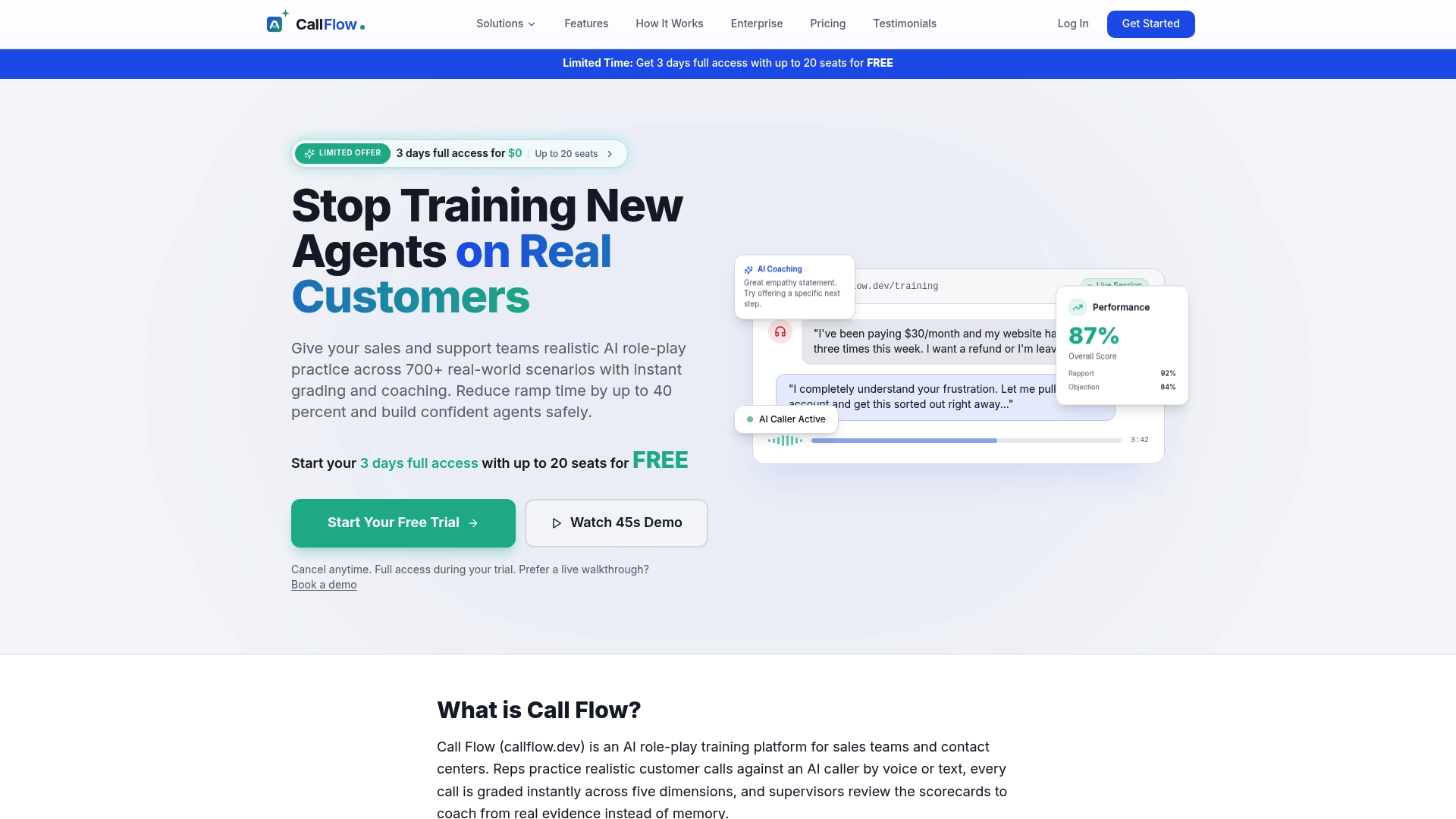
You can try the full platform risk-free, then choose a plan on our pricing page. Larger rollouts start on our enterprise page.
FAQ
What is deliberate practice in sales?
It is structured, coach-designed practice on one skill with immediate feedback and repetition. Ericsson's definition stresses designed tasks, actionable feedback and repeated performance. Simply making more calls does not qualify.
How long should a deliberate practice session last?
Short sessions work best, around 10–15 minutes on a single behavior. Frequent short runs beat one long workshop because reps can repeat the skill while the feedback is fresh. Add difficulty gradually across the week.
How do I give feedback that changes rep behavior?
Score against a rubric with behavioral anchors and name one fix right after the run. Research shows video feedback works better with a structured observation form. Pair the rep's self-score with your own to expose blind spots.
Does deliberate practice work for experienced reps?
It helps, but less than it does for novices. Research on B2B sales teams suggests experienced reps grow more through progressively harder real-world tasks. Use drills for specific gaps and live coaching for complex deals.
Sources
- Deliberate Practice and Acquisition of Expert Performance: A General Overview - Anders Ericsson - 2008 - Academic Emergency Medicine - Wiley Online Library
- Frontiers | Is the Deliberate Practice View Defensible? A Review of Evidence and Discussion of Issues
- Transfer of Training: A Meta-Analytic Review - Brian D. Blume, J. Kevin Ford, Timothy T. Baldwin, Jason L. Huang, 2010